Aikijutsu — not what you think.
A principle-based martial art taught in Scarborough for 23 years.
For adults who want real martial understanding — without the cardio.
What Aikijutsu is
Aikijutsu is a traditional Japanese martial art — literally, the art of applying the principles of Aiki.
If you've heard of Aikido or Jujutsu, this comes from the same historical root — but the training focus is different.
Aikijutsu isn't a fighting system or a set of techniques to memorise. It's a study of how movement actually works: how intent, timing, and structure shape what your partner feels, and why certain outcomes happen without force or speed.
If you've seen Aikido — the big circular movements, the partners eager to fall with the flow — Aikijutsu is not that. Same lineage. Different engine.
You don't need experience, fitness, or flexibility to begin. And if you've trained before, this won't feel like what you remember.
Most people recognise that within the first few minutes.
Two ways in
There's one tradition here — Yoseikan — and how you learn it, where you start here, depends on what you bring.
New to martial arts
Start with Foundations
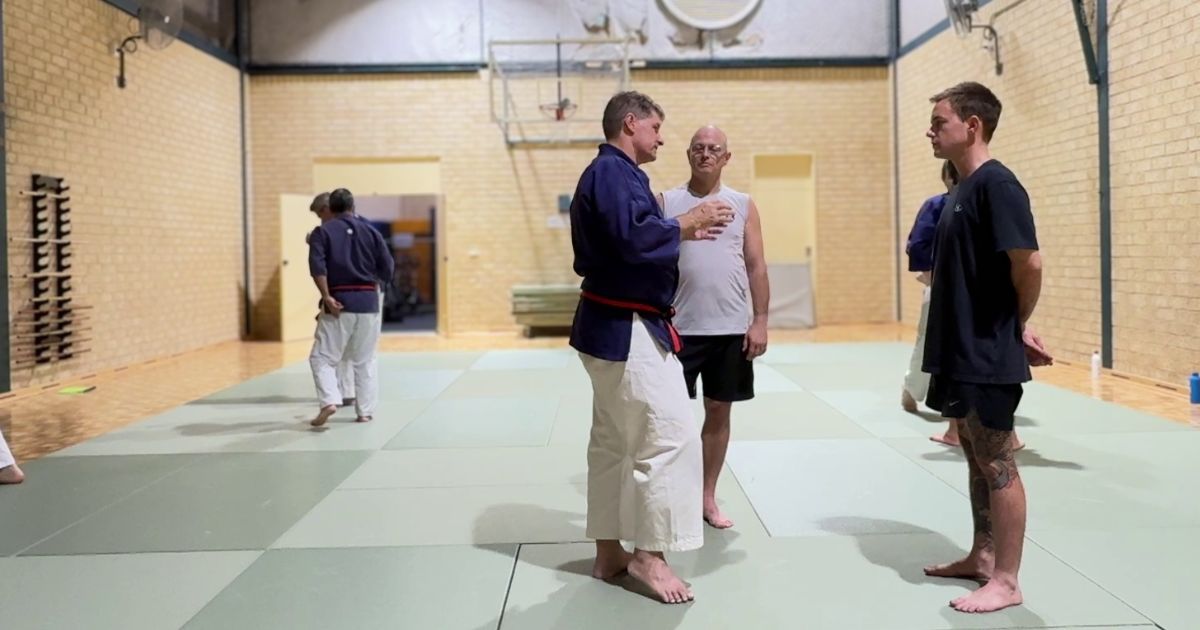
Never trained — or walked away from something years ago and never found the adult version of it?
Begins here: a four-week course, built from the ground up. No experience, no fitness, no uniform.
Experienced Martial Artist
Come and feel it
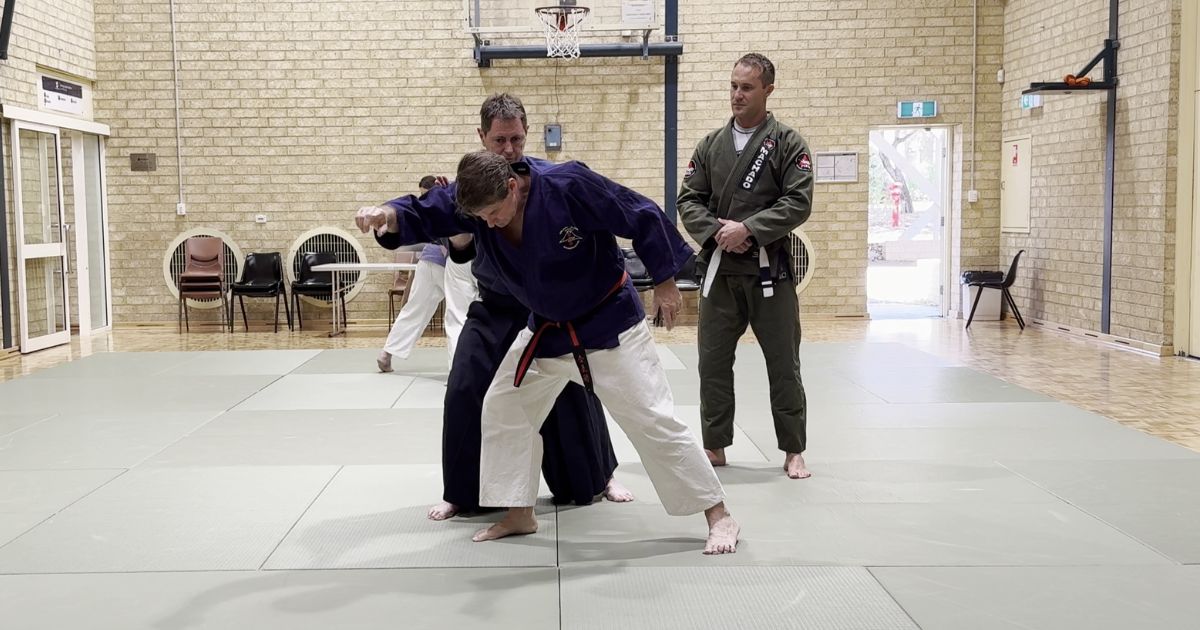
Aikidoka, jujutsuka, judoka, karateka — you don't need a beginner's course. You need time on the mat to find out whether what you know transfers.
Structured introduction with Darren Edwards Shihan
Two Saturday afternoons. Cohort of 3–4 experienced practitioners. Personal transmission from the lineage's teacher.
Single trial class with a senior student
One time session dropped into regular class time. Individual. Informal. See if the room fits you.
What this dojo is
Kobukai is a not-for-profit dojo in Scarborough. No one is paid, including the instructor. People train here because they want to.
If you want a martial art that promises transformation, fast grading, or a competition record — this probably isn't it.
If you want something serious that gets more interesting the longer you train — keep reading.
A lineage you can place
Kobukai carries Minoru Mochizuki's Yoseikan tradition, through Darren's teachers Yoshiaki Unno Sensei and Jan Janssens Kyoshi One integrated system — Aikijutsu empty-hand, Jojutsu with the short staff, and Iaijutsu with the sword — the same principles, armed and unarmed.
When training runs
Classes run 3x a week in our Scarborough Dojo
Monday and Wednesday evenings 7:30pm-9pm.
Saturday afternoon 1:15pm - 3pm.
Who teaches here
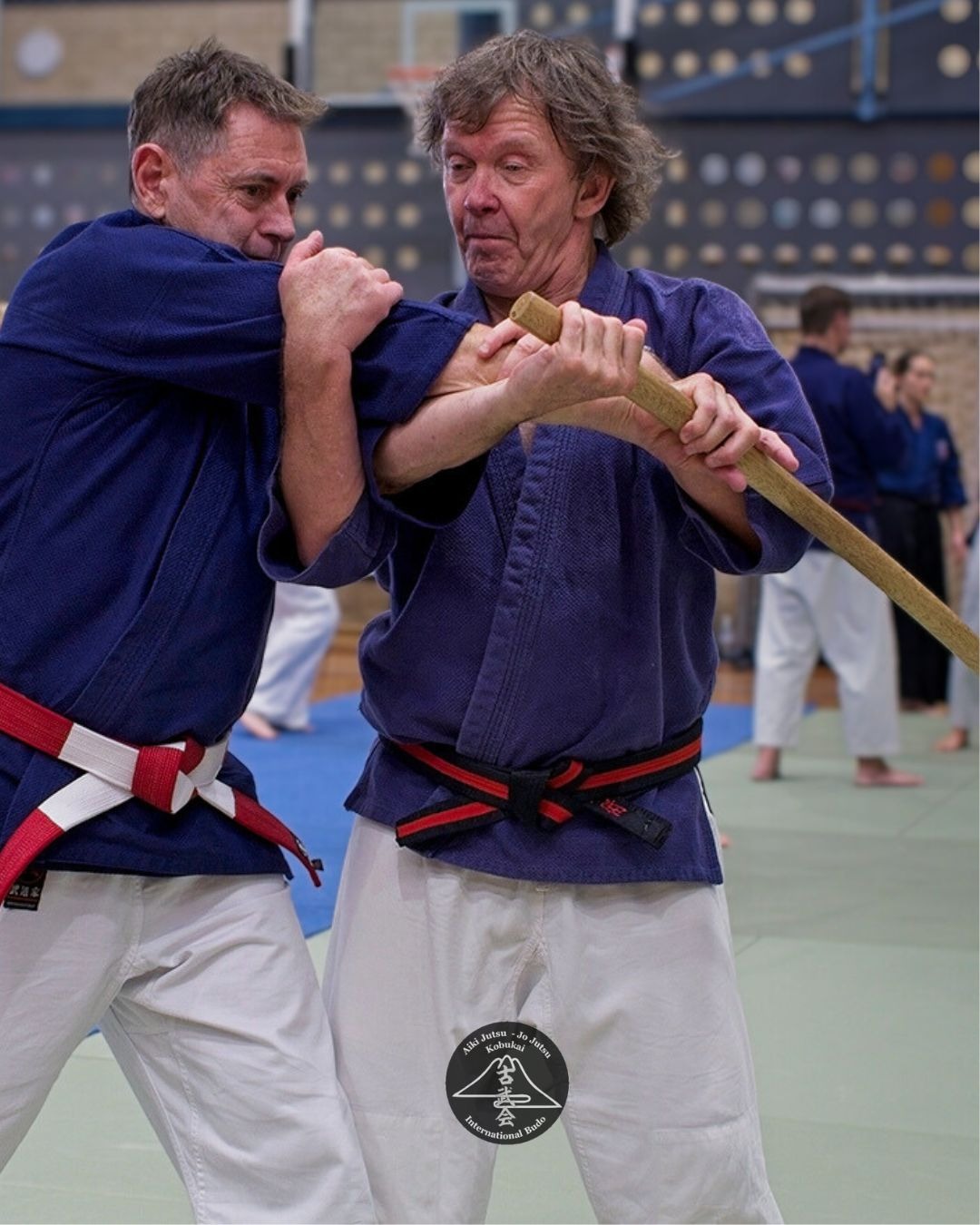
Darren Edwards Shihan has trained in the Yoseikan tradition for 35 years and taught in Scarborough for 23. His belt is coral red and white — a rank beyond black belt that most practitioners never reach.
In class he's usually the one receiving the technique, not just demonstrating it. He needs to feel what the student is doing before the feedback is accurate.
When the most experienced person in the room takes the position of the person being moved, it tells you something about how this art is actually transmitted.
Worth a conversation?
We won't ask you to book, register, or commit to anything. If what you've read sounds like something you've been looking for, the most useful next step is a short conversation.
The easiest way to reach us is Facebook
Prefer something else?
Kobukai International Budo - Australia
CLASS TIMETABLE
Mon/Wed 7:30pm-9pm
Sat 1:15pm-3pm
Setup 15mins before class
ADDRESS:
Scarborough Community Hub.
173 Gildercliffe Street, Scarborough, Perth, WA 6019
Minor hall next to Gym.
Free Parking, Showers available
© Copyright 2026 All rights reserved.